

REIT Consulting
Develop an optimal REIT-based property investment strategy for sustainable growth and maximum dividend distribution.


REIT at a Glance
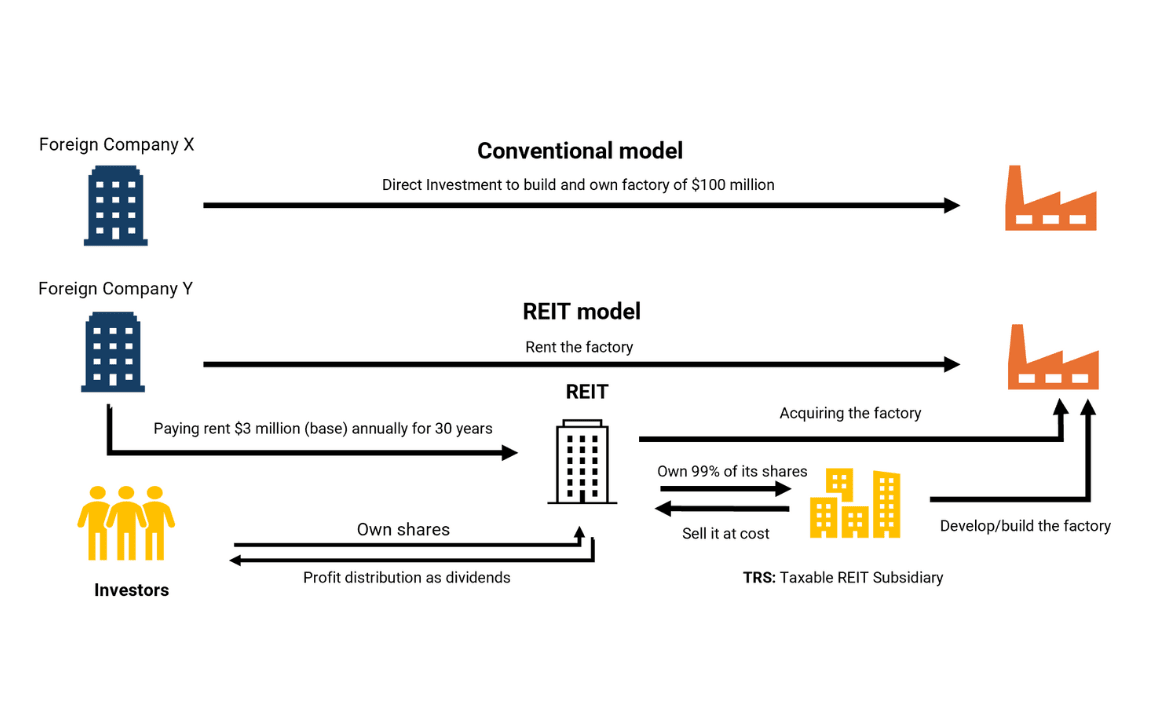
REIT (Real Estate Investment Trust) is a collective investment vehicle used to raise funds from investors and invest them in a portfolio of income-producing property assets, such as office buildings, shopping centers, apartments, hotels, hospitals, logistics warehouses, or infrastructure
Why REITs?

Indonesia owns over Rp 11,000 trillion worth of state and commercial property assets, most of which are illiquid and underutilized.

With increasing fiscal pressure, REITs can unlock liquidity without losing ownership.

Southeast Asia is poised to become the next REIT hub. Singapore REIT market cap: US$100+ billion.

Sharia REITs are in high demand in Middle East–Southeast Asia corridors.



Mechanism of REIT
- REITs buy or build properties
- It is leased or managed to generate income
- Net income from rentals (after deducting expenses) is distributed to unit holders as dividends
- In many countries, REITs are required to distribute at least 90% of net income to investors in the form of dividends in order to get special tax treatment (e.g. corporate income tax exemption)
Strategic Partnership
The Best Strategic for REIT Development

BUMN Asset Owners
State-Owned Enterprises that contribute strategic property assets to be monetized through REIT structures.

Pension Funds & Insurance Firms
Long-term institutional investors seeking stable, dividend-generating property-backed instruments.

Global REIT Investors
Cross-border investment entities interested in high-yield Southeast Asian property markets.

Islamic Finance Institutions
Sharia-compliant financial entities supporting Sukuk-based or Ijarah-based REIT frameworks.

Asset Managers & Trustees
Professional entities responsible for managing REIT operations, compliance, and investor protection.
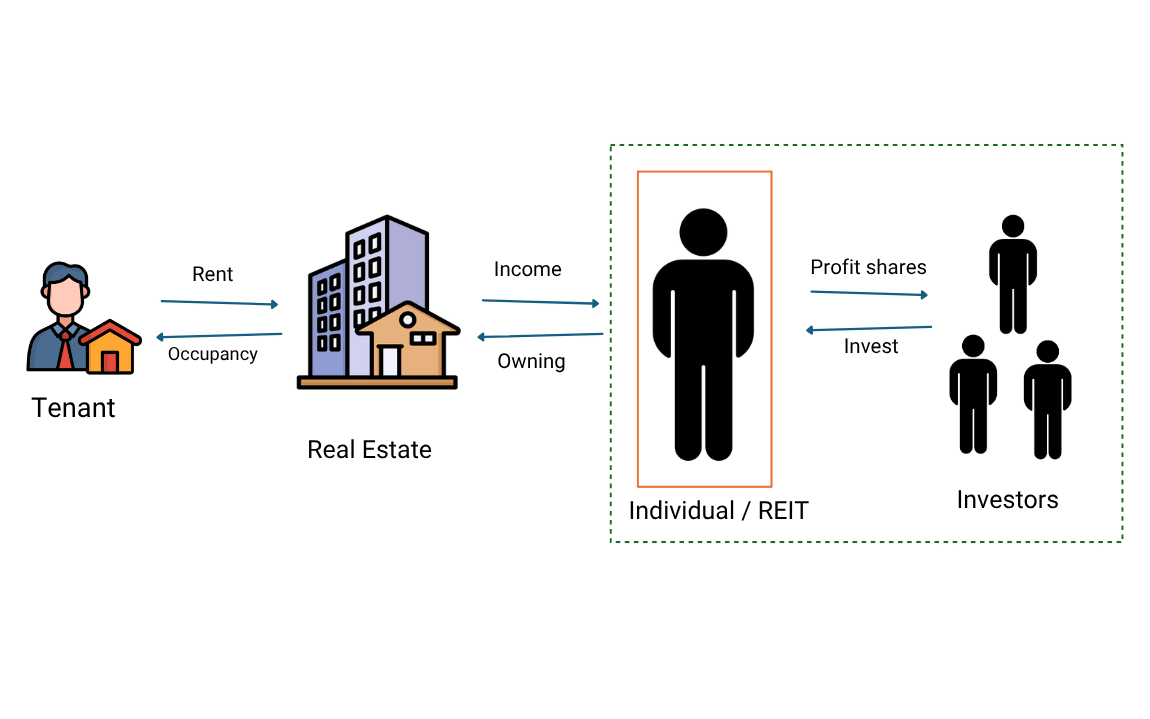
Uniqueness of REIT Scemes
REITs has various unique features that greatly impact economic growth
- REITs are required to distribute at least 90% of their taxable income to investors as dividends or profit sharing funds.
- 75% of the REIT's income must come from rental income.
- 75% of REIT assets must be real estate/government securities.
- REITs in the United States is 9.8%;
- The imposition of REIT corporate income tax is calculated after the REIT distributes at least 90% of its taxable income to investors as dividends or profit sharing funds.
- REIT can have securities in other companies with the maximum value of its securities is 5% of its total assets
- The total share ownership of REITs from the 5 largest investors cannot exceed 50%, or in other words
- REITs are prohibited from having controlling shareholders, and in practice the maximum share ownership of
- REITs in the United States is 9.8%;
REIT Scemes
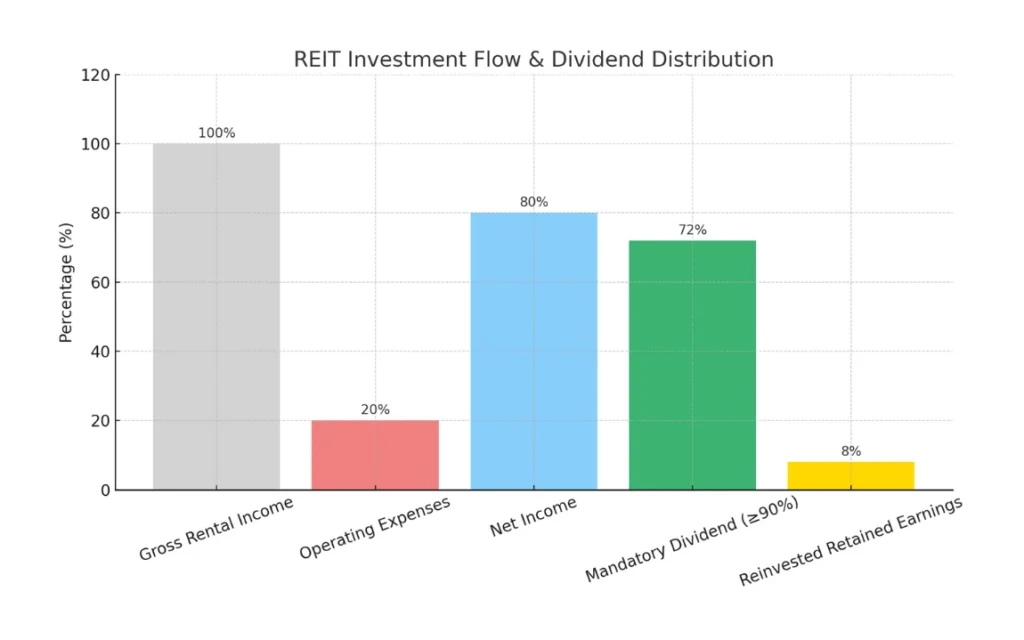
REIT Investment Flow & Dividend Distribution

Gross Rental Income (100%)
Total income from rental of properties owned by the REIT before deducting any expenses.
Mandatory Dividend (≥90%)
As per regulations, a minimum of 90% of net profit must be distributed to investors as annual dividends.
Operating Expenses (20%)
Operating expenses such as maintenance, property management, and taxes are deducted from gross revenue.
Reinvested Retained Earnings (8%)
The rest can be kept in cash or reinvested for asset expansion or property value improvement.
Operating Expenses (20%)
The REIT's net profit after operating expenses is used as the basis for dividend distribution.